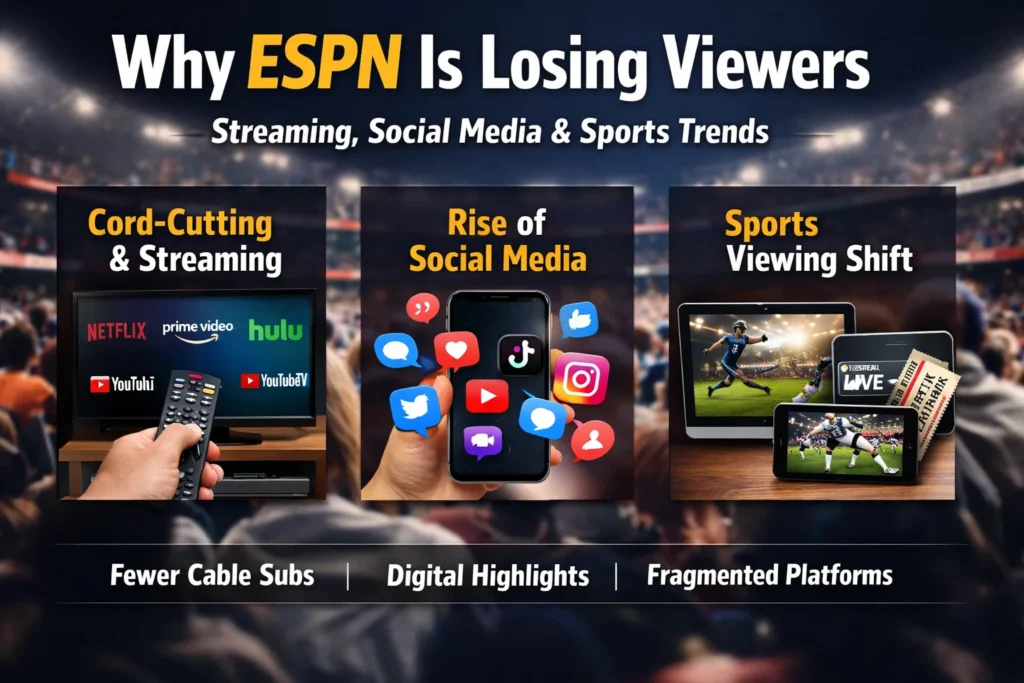
Have you ever wondered why ESPN, once the undisputed leader in sports broadcasting, seems to be losing viewers? This trend has sparked discussions among media analysts, advertisers, sports professionals, and fans alike. Understanding it is more than just a curiosity—it sheds light on how sports consumption and media engagement are evolving in the digital age.
This article is for anyone who wants clarity: whether you’re a media student, a sports professional, a marketer analyzing audience trends, or just a curious fan. We’ll explore the structural, technological, and cultural factors driving the decline in traditional ESPN viewership—and what it means for the future of sports media.
The Shift from Traditional Cable to Streaming
One of the most significant reasons ESPN is losing viewers comes from the larger migration away from cable TV toward streaming platforms.
For decades, ESPN thrived as part of cable bundles, reaching millions of households automatically. Fans tuned in daily not just for live games but also for analysis, talk shows, and highlights. However, the rise of high-speed internet and mobile devices has reshaped consumer habits. People now question the value of expensive cable subscriptions and rigid schedules, choosing flexibility over tradition.
Cord-Cutting and Its Impact
“Cord-cutting”—the trend of canceling cable for internet-based options—has accelerated rapidly. Millions of U.S. homes no longer have access to cable services carrying ESPN, meaning former viewers simply cannot watch through traditional channels.
This fragmentation has changed how audiences are measured. While Nielsen ratings for shows like SportsCenter may appear to decline, it doesn’t necessarily mean fans are losing interest. Many viewers now watch games on league apps, social media highlights, or on-demand clips.
Streaming Services and Monetization Challenges
ESPN has tried to adapt with ESPN+, its direct-to-consumer streaming service. While ESPN+ attracts younger, mobile-first audiences, streaming views are often valued differently than traditional TV ratings. Advertisers, accustomed to large, stable cable audiences, now need precise cross-platform data. This shift pressures ESPN to rethink both content distribution and ad strategy.
Loss of Exclusive Content
Another factor is content exclusivity. Platforms like Amazon Prime, Peacock, and league-specific services (NFL+, NBA League Pass) now hold rights to games that once aired exclusively on ESPN. This means ESPN’s once-unquestioned hold on must-see live sports has weakened, reducing the incentive for fans to tune in.
Key takeaway: The decline in traditional viewership reflects changing access and measurement, not necessarily a drop in overall interest in sports.
Competition from Digital Platforms
The rise of digital platforms has further reshaped sports consumption. Fans now engage with sports content in ways TV cannot match.
Short-Form Content and Social Media
Platforms like TikTok, YouTube Shorts, Instagram Reels, and X (formerly Twitter) offer highlights in under a minute. Young viewers, in particular, prefer these clips over two-hour broadcasts. These platforms also allow social interaction and virality, making the viewing experience more participatory.
Personalized Viewing Experiences
Digital platforms curate content based on user preferences—favorite teams, players, or types of highlights—creating tailored experiences. When fans can get exactly what they want, when they want it, on their preferred device, traditional broadcast loses its edge.
League-Specific Streaming
Services like NFL+, NBA League Pass, and MLB.TV make it easy to follow favorite teams without ESPN. Fragmented access means some viewers skip ESPN entirely, favoring platforms that match their schedules and devices.
Mindset insight: Fans today don’t just watch sports—they personalize, interact, and share instantly. ESPN faces the challenge of keeping up with this participatory culture.
How Advertisers Are Responding
As audiences shift online, advertising dollars follow. Digital platforms provide precise engagement metrics, making them more attractive to brands than traditional TV impressions. This shift puts further pressure on ESPN’s traditional revenue model, which relied heavily on cable subscriber fees and linear broadcast ratings.
Frequetly Asked Questions
Why is ESPN losing viewers?
ESPN is losing viewers primarily due to the shift from traditional cable TV to streaming platforms. Many fans now watch games on league-specific apps, social media highlights, or on-demand clips, rather than tuning into scheduled broadcasts. Changing habits, digital competition, and fragmented access have all contributed to the decline in traditional viewership.
Does ESPN still have a large audience?
Yes. While traditional TV ratings have declined, ESPN’s overall audience—including digital platforms, ESPN+ subscribers, and social media engagement—remains significant. The decline mostly reflects a shift in how and where people watch, not a drop in sports interest.
How does streaming affect ESPN’s viewership?
Streaming has fragmented ESPN’s audience. Viewers who once relied on cable now access sports via mobile apps, league-specific subscriptions, or social media. While this increases flexibility for fans, it makes traditional TV ratings appear lower, impacting ad revenue tied to linear broadcasts.
What role do social media and short-form content play?
Platforms like TikTok, YouTube Shorts, and Instagram Reels provide instant highlights and key game moments. Younger fans especially prefer these short, interactive clips over full-length broadcasts, which reduces live TV viewership for networks like ESPN.
Is ESPN losing exclusive sports content?
Yes. Other streaming platforms, such as Amazon Prime, Peacock, NFL+, and NBA League Pass, now hold rights to games that previously aired exclusively on ESPN. Losing this exclusivity means ESPN no longer guarantees large simultaneous audiences for live events.
How are advertisers reacting to these changes?
Advertisers follow audiences. As viewers move online, advertising budgets shift toward digital platforms with precise engagement metrics. This pressures ESPN to adapt its ad strategy for both traditional TV and streaming audiences.
Does this mean ESPN is failing?
Not necessarily. ESPN is adapting by offering ESPN+, digital content, and social media engagement. The network is facing industry-wide changes rather than failing as a brand. Success now depends on how well it integrates streaming, mobile, and interactive content with traditional broadcasts.
Conclusion
The drop in traditional ESPN viewership is more than just a numbers problem—it reflects big changes in how we watch and engage with sports. Fans are no longer tied to cable schedules; streaming, social media highlights, and personalized apps have given people more control over when, where, and how they follow their favorite teams. At the same time, league-specific services and evolving habits mean viewers are spread across multiple platforms, making traditional ratings look smaller even though overall interest in sports is strong.
For ESPN and other broadcasters, the lesson is clear: success depends on adapting, not resisting. By combining the trusted experience of live coverage with flexible, digital-first offerings, networks can capture attention, keep fans engaged, and meet modern expectations. The future of sports media belongs to those willing to evolve with their audience.