Sports APIs open doors to real-time scores, schedules, team details, and player statistics. Beginners often feel overwhelmed when choosing a data source, especially with many free options available. Understanding how these APIs differ helps avoid frustration and saves development time. This guide explains popular choices in simple terms, focusing on clarity rather than complexity.
What Is the ESPN API and How Does It Work
ESPN API refers to a collection of publicly accessible endpoints used internally by ESPN. Although no official public documentation exists, developers commonly access these endpoints to fetch sports data in JSON format. Requests usually return live scores, match summaries, standings, and team information across major leagues.
Learning happens quickly with this API because no sign-up or API key is required. Data becomes available instantly through simple HTTP requests, making experimentation easy for first-time developers.
Why the ESPN API Is Popular Among Beginners
Ease of access makes ESPN API especially attractive. Beginners appreciate the ability to test real sports data without account creation or payment barriers. Coverage across multiple sports also allows experimentation with different projects using a single data source. Rapid feedback from live data helps new developers understand how APIs behave in real-world scenarios.
Limitations of Using the ESPN API
Lack of official support creates uncertainty. Endpoint structures may change without notice, breaking applications unexpectedly. Commercial use raises legal concerns since terms of service do not clearly allow redistribution. Reliability depends entirely on ESPN’s internal systems, which beginners cannot control or predict.
Understanding Other Free Sports APIs
Other free sports APIs usually come from official providers or community-driven platforms. These services often include documentation, usage limits, and clearer licensing terms. Beginners benefit from predictable structures and long-term stability when learning API integration properly.
Overview of Official Free Sports APIs
Official providers typically offer free tiers with limited requests. Documentation explains endpoints, parameters, and response formats in detail. Learning becomes more structured, helping beginners understand best practices such as authentication, rate limiting, and error handling.
Differences Between Official and Unofficial Sports APIs
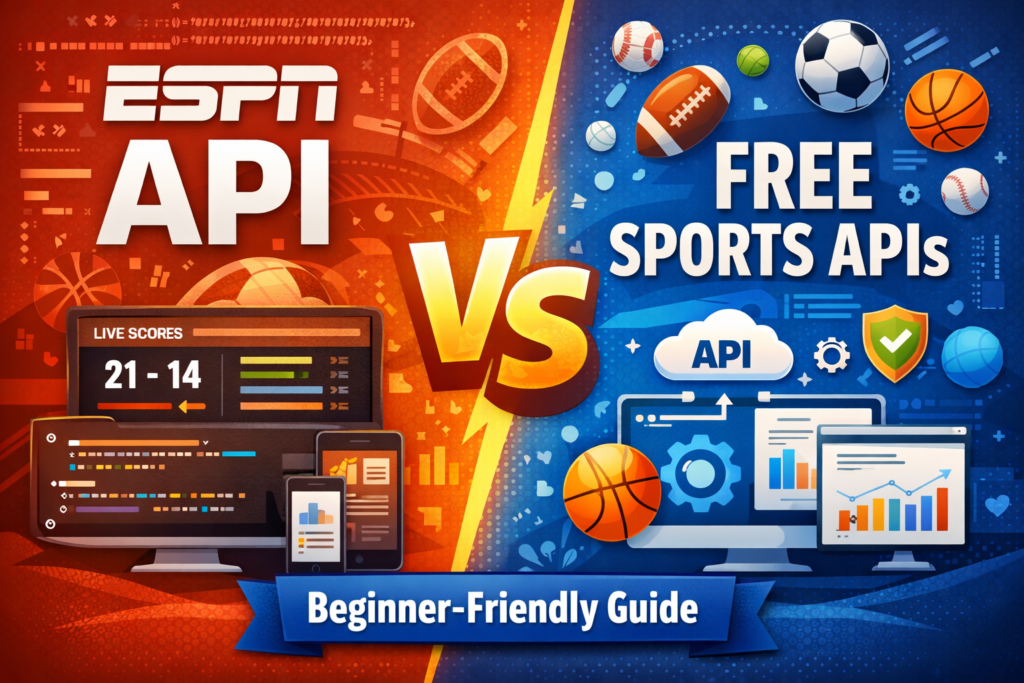
Official APIs prioritize stability and clarity, while unofficial options prioritize access and convenience. ESPN API delivers rich data quickly but lacks guarantees. Other free sports APIs trade some data depth for consistency, legal clarity, and learning-friendly documentation.
ESPN API vs Other Free Sports APIs
Comparison between ESPN API vs other free sports APIs often comes down to goals and experience level. Beginners focused on experimentation enjoy ESPN’s simplicity. Learners aiming for production-ready skills benefit more from documented alternatives.
Ease of Use for Beginners
Minimal setup makes ESPN API feel approachable. Official APIs introduce extra steps like API keys and dashboards, yet these steps mirror real-world development workflows. Long-term learning improves when beginners experience both approaches.
Data Coverage and Sports Availability
ESPN API covers major American and international sports with detailed live data. Other free sports APIs may focus on specific leagues or regions. Choice depends on project scope rather than technical skill alone.
Reliability and Long-Term Stability
Stability favors official providers. Predictable updates and versioning reduce maintenance stress. ESPN API offers no such guarantees, making it risky for ongoing projects.
Legal and Usage Considerations
Clear licensing matters for public or commercial applications. Official APIs define acceptable use clearly. ESPN API exists in a gray area, suitable mainly for personal learning and testing.
Which Sports API Should Beginners Choose
Choice depends on intent rather than difficulty. Learning goals, project lifespan, and future growth plans should guide decisions.
Best Choice for Learning and Practice
ESPN API works well for short-term learning, demos, and understanding how sports data flows through applications. Beginners gain confidence quickly without setup friction.
Best Choice for Real Projects
Official free sports APIs fit better for portfolios, client work, or long-term apps. Skills learned through documented APIs transfer easily to paid and enterprise solutions.
Common Beginner Mistakes When Using Sports APIs
Relying solely on unofficial APIs causes surprises later. Ignoring rate limits leads to blocked requests. Skipping documentation reading slows progress. Awareness of these pitfalls helps beginners move forward smoothly.
Frequently Asked Questions
Is the ESPN API officially supported for developers?
ESPN API is not officially supported for public use. Access comes from publicly available internal endpoints, which means documentation, stability, and long-term availability are not guaranteed. Usage works best for learning, testing, and personal projects rather than production applications.
Can beginners use the ESPN API without coding experience?
Basic coding knowledge helps, but beginners can still experiment with simple tools like browsers, Postman, or beginner-friendly scripts. ESPN API often serves as a first exposure to real-world sports data because setup is minimal.
Are free sports APIs really free forever?
Most free sports APIs operate on limited plans. Free tiers usually include request caps, reduced data access, or restricted leagues. Long-term or high-traffic projects often require upgrading to paid plans.
Which sports API is best for building a portfolio project?
Official free sports APIs are better suited for portfolio work. Clear documentation, stable endpoints, and proper authentication reflect real-world development practices and help showcase professional skills.
Can ESPN API be used for commercial applications?
Commercial use is risky. ESPN does not provide clear permission for redistribution or monetization of data accessed through unofficial endpoints. Official APIs with defined licenses are safer for business use.
Should beginners start with ESPN API or an official sports API?
Starting with ESPN API works well for fast learning and experimentation. Transitioning later to an official sports API helps build long-term skills and prepares beginners for professional development environments.
Conclusion
Right sports API choice sets the tone for a learning journey. ESPN API vs other free sports APIs represents a balance between convenience and correctness. Experimentation builds confidence, while structured tools build sustainable skills. Combining both approaches creates a strong foundation for any beginner exploring sports data development.